Caprese with Roasted Tomatoes and Burrata Recipe
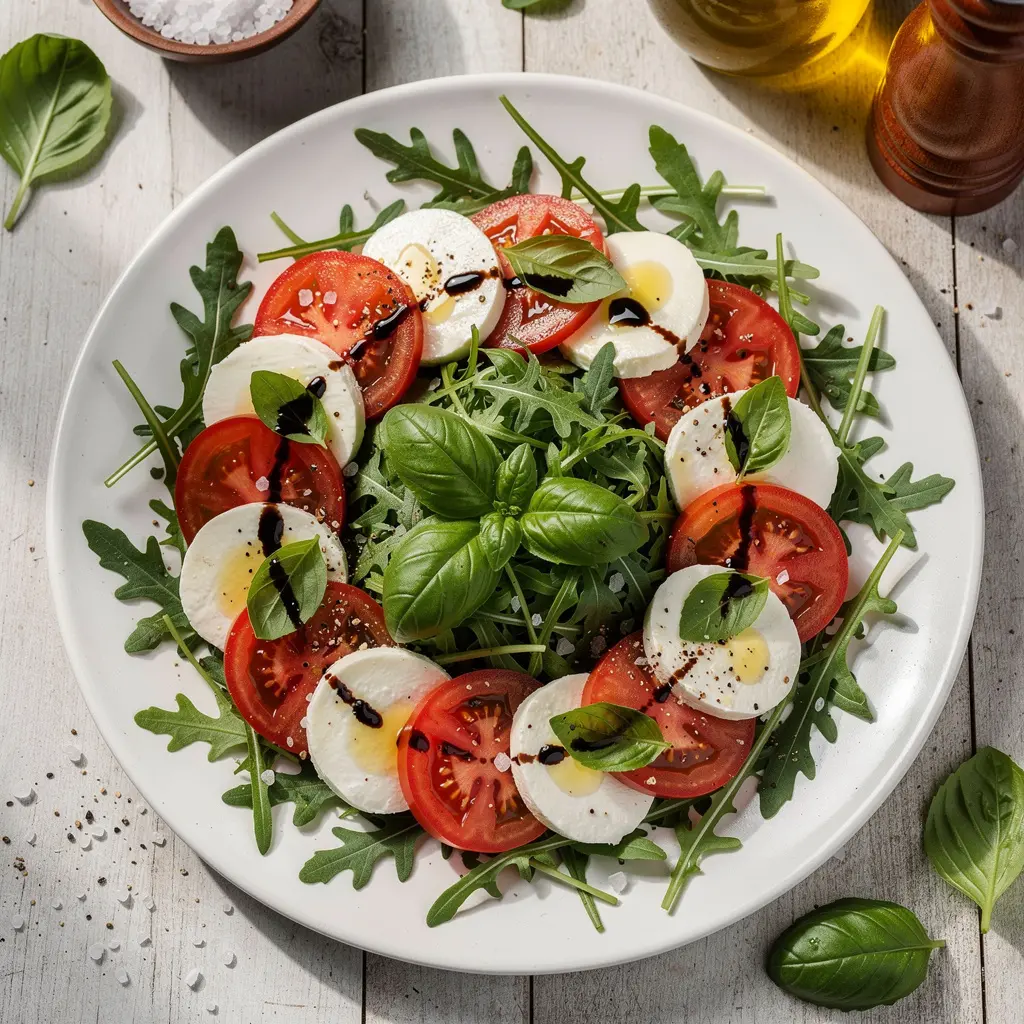
This is a twist on the classic caprese salad, but with roasted tomatoes and creamy burrata. In Italy, dishes like this often appear as an appetizer at summer gatherings – light but impressive. Roasting the tomatoes brings out their sweetness, and the burrata adds a “wow” effect as it spills over the plate.
This is a modern, “bistro-style” interpretation of caprese, found more often in urban wine bars than in traditional trattorias. Roasted tomatoes fit into the trend of amplifying classic Italian antipasti using simple technique.
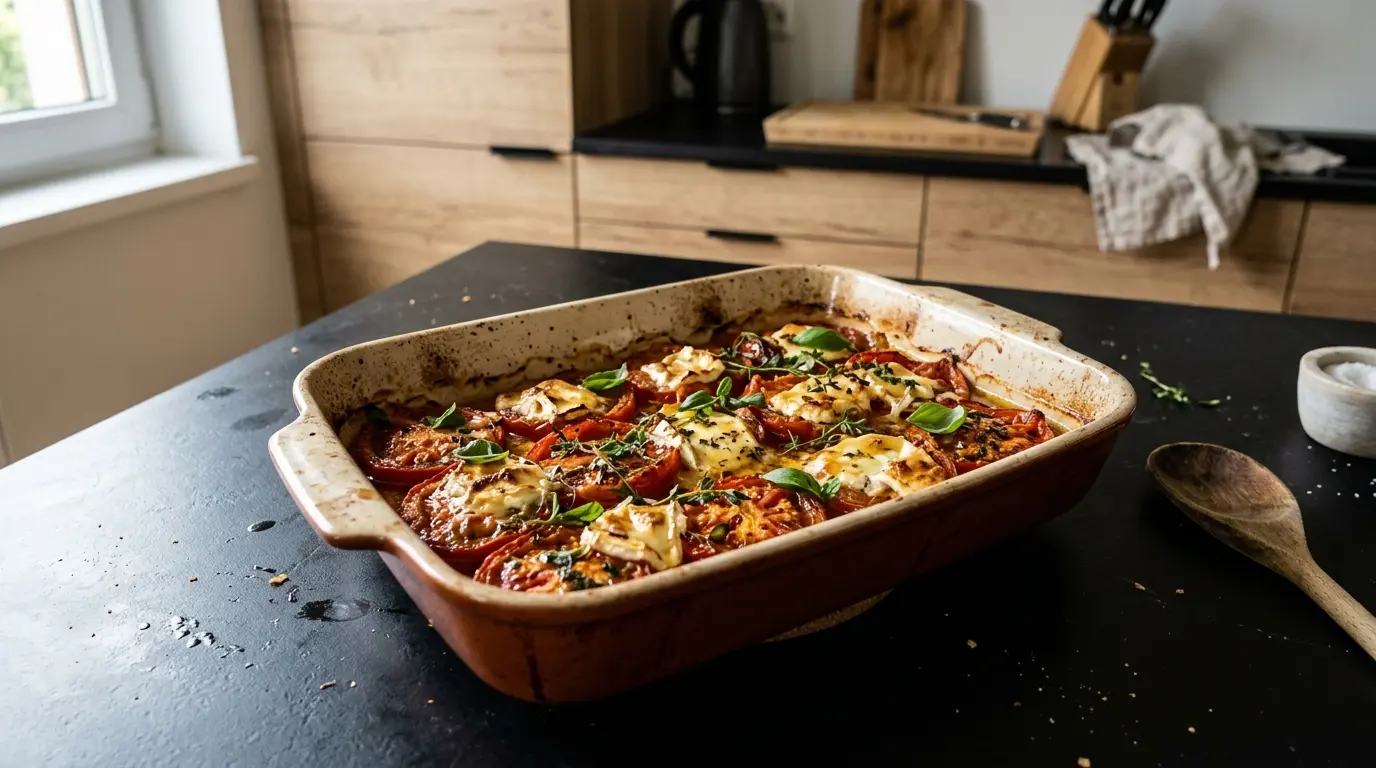
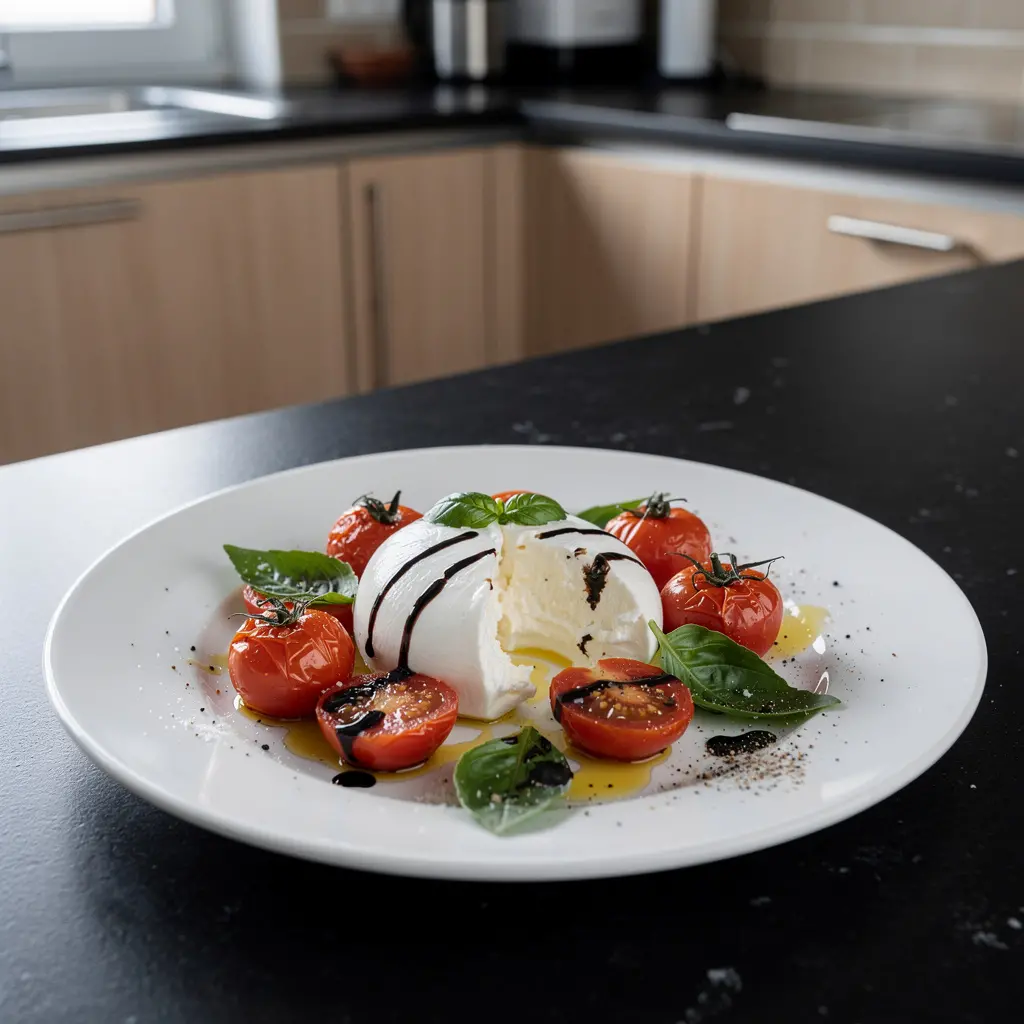
Caprese with roasted tomatoes and burrata combines familiar flavors with a completely different texture – warm, caramelized tomatoes contrast with the cool, liquid center of the burrata. Roasting brings out the tomatoes’ natural sweetness, and the creamy cheese makes the whole dish taste like a restaurant-style appetizer.
Why this version works
- Roasting the tomatoes cut-side up keeps the juices inside and naturally concentrates them.
- Rubbing the plate with garlic adds a background aroma without harsh pungency.
- Letting the tomatoes rest briefly prevents the burrata from melting too much.
- Thoroughly drying the burrata keeps the rich tomato juices from becoming watered down.
Chef's tips
Roast the tomatoes until they start to split slightly and release their juices – that’s the sign their flavor has concentrated. Take the burrata out of the fridge at least 20–30 minutes in advance so it reaches room temperature and flows nicely when cut. Don’t skimp on good olive oil and flaky salt – they really elevate the flavor of the whole dish.
How to serve
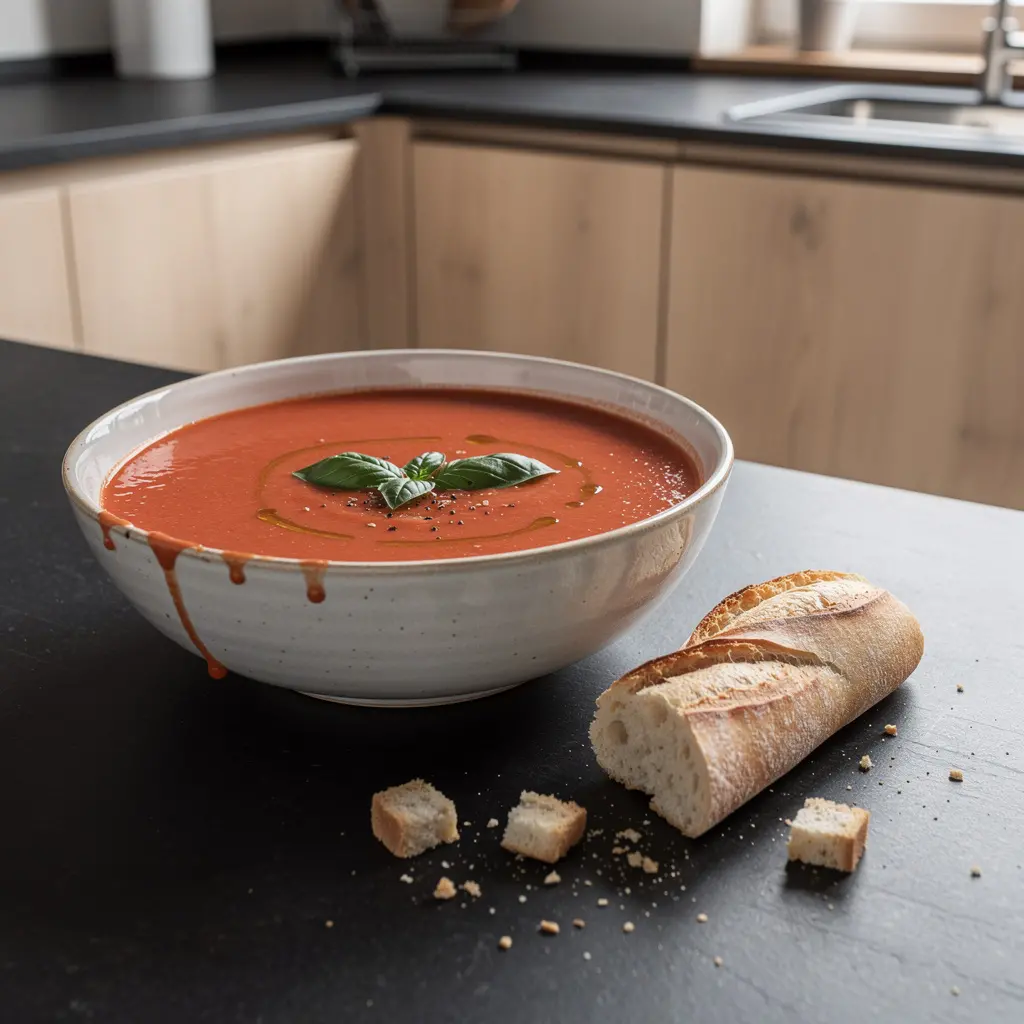
This is an ideal appetizer for summer get-togethers on the balcony or in the garden, served with crusty baguette to wipe up the sauce from the plate. It pairs beautifully with a light, dry rosé or well-chilled prosecco. For larger parties you can arrange everything on a big platter so guests can help themselves.
Watch out for
- Don’t roast the tomatoes until the skins are deeply blackened – the juices will turn bitter.
- Don’t place the burrata on a very hot plate straight from the oven, or the center will spill out quickly.
- Too little salt will make the tomato sweetness taste flat – season them again on the baking sheet if needed.
Substitutions
- You can replace burrata with mozzarella di bufala, adding a bit more olive oil for creaminess.
- Swap cherry tomatoes for small plum tomatoes, cut into quarters and arranged cut-side up.
- Instead of balsamic vinegar, use a thick balsamic glaze, but in a smaller amount, as it’s sweeter.
Ingredients
- cherry tomatoes you can also use small plum tomatoes - 400 g
- burrata can be replaced with fresh cow’s milk mozzarella - 200 g
- extra virgin olive oil - 3 tablespoons
- balsamic vinegar preferably thick; you can use balsamic glaze - 1 tablespoon
- fresh basil leaves torn into smaller pieces - 1 handful
- garlic clove optional, for rubbing the plate - 1 piece
- salt to taste
- freshly ground black pepper to taste
Preparation
- Preheat the oven to 190°C (top and bottom heat).
- Wash and dry the tomatoes, then cut them in half. Arrange them cut side up on a baking tray lined with baking paper.
- Drizzle the tomatoes with 2 tablespoons of olive oil, sprinkle with a pinch of salt and pepper. Place in the oven for 20–25 minutes, until they soften, wrinkle slightly and release their juices.
- If using garlic, cut the clove in half and gently rub a large flat plate or serving platter with it – this will give a light aroma without overpowering the flavor.
- Let the roasted tomatoes cool slightly for about 5 minutes so they are warm but not very hot.
- Place the burrata in the center of the plate, either whole or torn into large pieces. Arrange the roasted tomatoes around it, along with the juices from the tray.
- Drizzle everything with the remaining 1 tablespoon of olive oil and the balsamic vinegar. Sprinkle with salt and freshly ground pepper.
- Finally, tear the basil leaves with your hands and scatter them over the top. Serve immediately, preferably with pieces of fresh baguette or ciabatta for dipping into the sauce.
Storage
Store leftover roasted tomatoes in the fridge in a small jar covered with olive oil and use within 2–3 days, for example on bruschetta or in pasta. Burrata is best eaten fresh; if you have any left, keep it in its liquid in the fridge and finish within a day, noting that the texture will be less creamy after chilling again.
I always make this version of caprese when I find a crate of very ripe cherry tomatoes “on sale” at the market. On lazy Sunday afternoons I sometimes eat it on its own, with a whole small loaf of bread, instead of a classic lunch.