Cantonese Steamed Fish with Ginger and Scallions Recipe
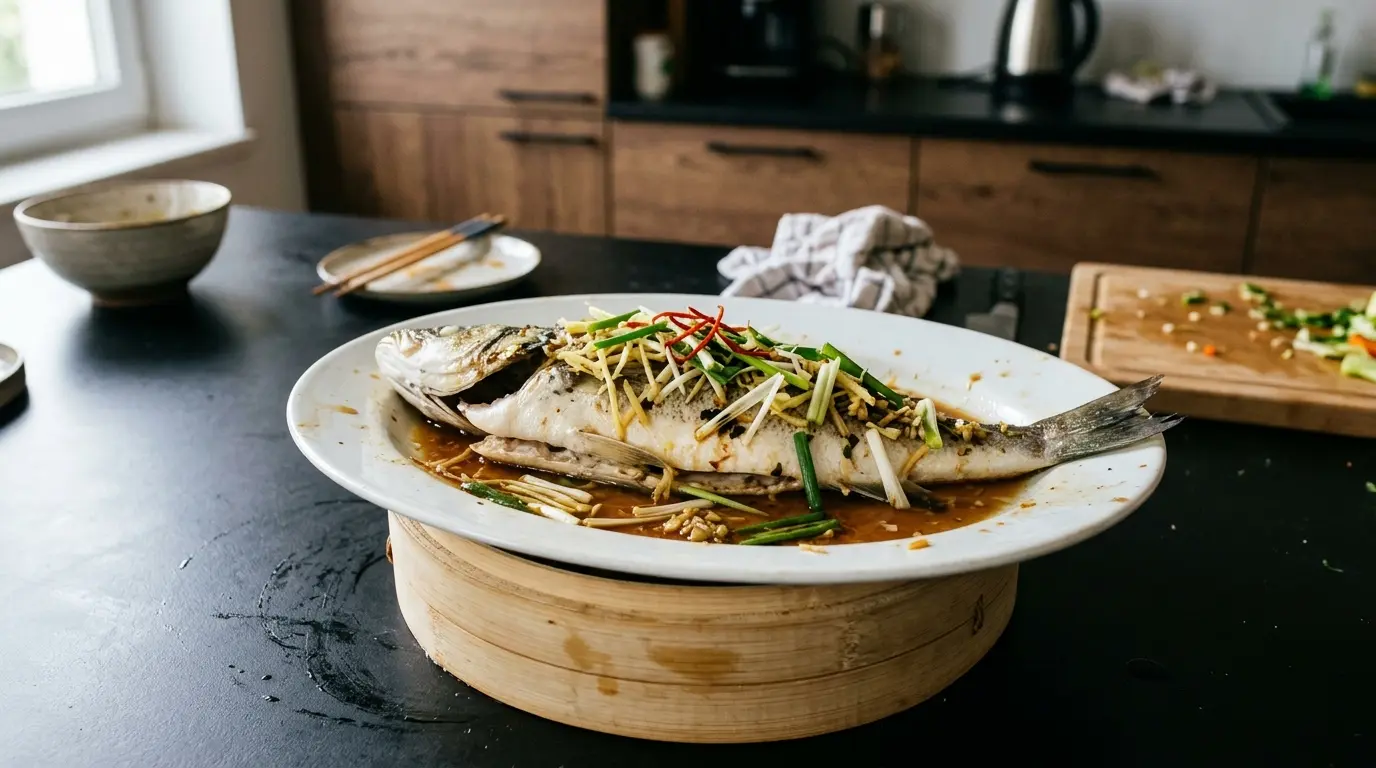
Delicate steamed fish with ginger and scallions is one of the most classic dishes of Cantonese cuisine. It’s light, aromatic, and very simple – in China it’s often served at family celebrations, because a whole fish symbolizes abundance. For a home version you can use fillets, which makes it easier and quicker.
In Cantonese cuisine, steaming is used to highlight the freshness of the fish, so this dish often appears at family banquets and on restaurant menus as a way to “test” product quality. Pouring hot oil over the scallions and ginger is a characteristic technique that adds aroma without a heavy sauce.
This dish showcases the essence of Cantonese cooking: fresh fish, minimal seasoning, and a focus on clean, delicate flavors. The hot oil poured over ginger and scallions at the end releases an intense aroma that makes the simple ingredients taste restaurant-quality.
Why this version works
- Using fillets instead of a whole fish shortens the cooking time and makes it easier to eat with chopsticks or a fork.
- Very thin strips of ginger and scallions quickly release their aroma into the steam without overpowering the delicate flesh.
- Separately heated soy sauce and very hot oil create the restaurant‑style effect of “scalding” the aromatics.
- Pouring off the excess liquid from the plate prevents the sauce from becoming watery and losing flavor intensity.
Chef's tips
Choose the freshest fish you can find – the fewer seasonings there are, the more important the quality of the fish becomes. Don’t skip drying the fillets before steaming; this helps them cook evenly and prevents the sauce from becoming too watery. Have the hot oil and sauce ready just before the fish is done so you can serve it immediately.
How to serve
Serve the fish family-style in the center of the table, with bowls of steamed jasmine rice and a couple of light vegetable sides, such as stir-fried bok choy or a quick cucumber salad with rice vinegar. Spoon some of the aromatic sauce from the plate over the rice.
Watch out for
- Don’t steam over weak heat – if the water is only gently steaming, the cooking time will stretch and it’s easy to overcook the fish.
- With very thin fillets, start checking for doneness after 6–7 minutes by gently opening the center with a fork.
- When pouring on the hot oil, keep your hands to the side of the plate and pour from a low height, as the oil may splatter.
Substitutions
- Instead of cod you can use hake, tilapia or pike‑perch of similar thickness.
- Light soy sauce can be partially replaced with fish sauce, reducing the amount of salt.
- If you don’t have sesame oil, simply leave it out – don’t replace it with olive oil, which would give the dish a Mediterranean flavor.
Ingredients
- white fish fillets e.g. cod, pollock, hake - 500 g
- fresh ginger piece about 4 cm - 20 g
- scallions - 4 piece
- light soy sauce - 3 tablespoon
- sugar - 1 teaspoon
- vegetable oil - 3 tablespoon
- vegetable oil optional - 0.5 teaspoon
- salt for lightly sprinkling the fish
- white pepper optional - 0.25 teaspoon
Preparation
- Pat the fish fillets dry with paper towels, lightly salt and sprinkle with white pepper on both sides. Set aside for 10 minutes so the flesh can lose its icy chill and cook evenly.
- Peel the ginger and slice it into very thin slices, then into thin matchsticks. Cut the scallions into long thin strips; set aside a handful of the nicest green strips for later. The ginger and scallions should look like light “hairs”, not thick sticks.
- On an ovenproof plate or shallow bowl, arrange half of the ginger and some of the scallions, creating a thin “bed” for the fish. Place the fish fillets on top in a single layer without overlapping, then spread the remaining ginger and some scallions over the fillets – the flesh should be mostly covered with the strips.
- Pour about 2–3 cm of water into a large pot or deep pan and bring to a vigorous boil over high heat, until the water is bubbling strongly and you can clearly see steam rising from the pot. Place the plate on a steaming rack or a stable inverted bowl so the plate does not touch the water.
- Cover the pot with a well‑fitting lid and steam over strong heat for 8–10 minutes without lifting the lid. The fish is done when the flesh has turned opaque, flakes easily into moist pieces when gently pressed with a fork, and is no longer glassy or translucent at the thickest point.
- While the fish is steaming, mix the light soy sauce, sugar, and about 2 tablespoons of water in a small saucepan. Heat over low heat until the sugar dissolves and the sauce is hot and lightly steaming, but not yet at a vigorous boil or reducing.
- Heat the vegetable oil in a small pan over medium‑high heat. When a single strip of scallion dropped in sizzles loudly at once and tiny bubbles form around the edges, remove the pan from the heat, before the oil starts to smoke.
- When the fish is ready, carefully remove the plate from the pot using oven mitts or a thick towel. If a lot of liquid has collected on the plate, gently pour off some of it, leaving only a thin layer on the bottom so the soy sauce doesn’t become watery.
- Sprinkle the fish with the reserved fresh scallions, pour the hot soy sauce over the top, then very carefully pour the hot oil over the surface of the fish and greens. You should hear a clear sizzle and the ginger and scallions will release a strong aroma immediately; finally, drizzle with sesame oil and serve at once.
Storage
No storage information available for this dish.
This is one of those dishes that looks very simple but feels special enough for guests. Once you try steaming fish this way, it may become your go-to method for a quick, elegant dinner.