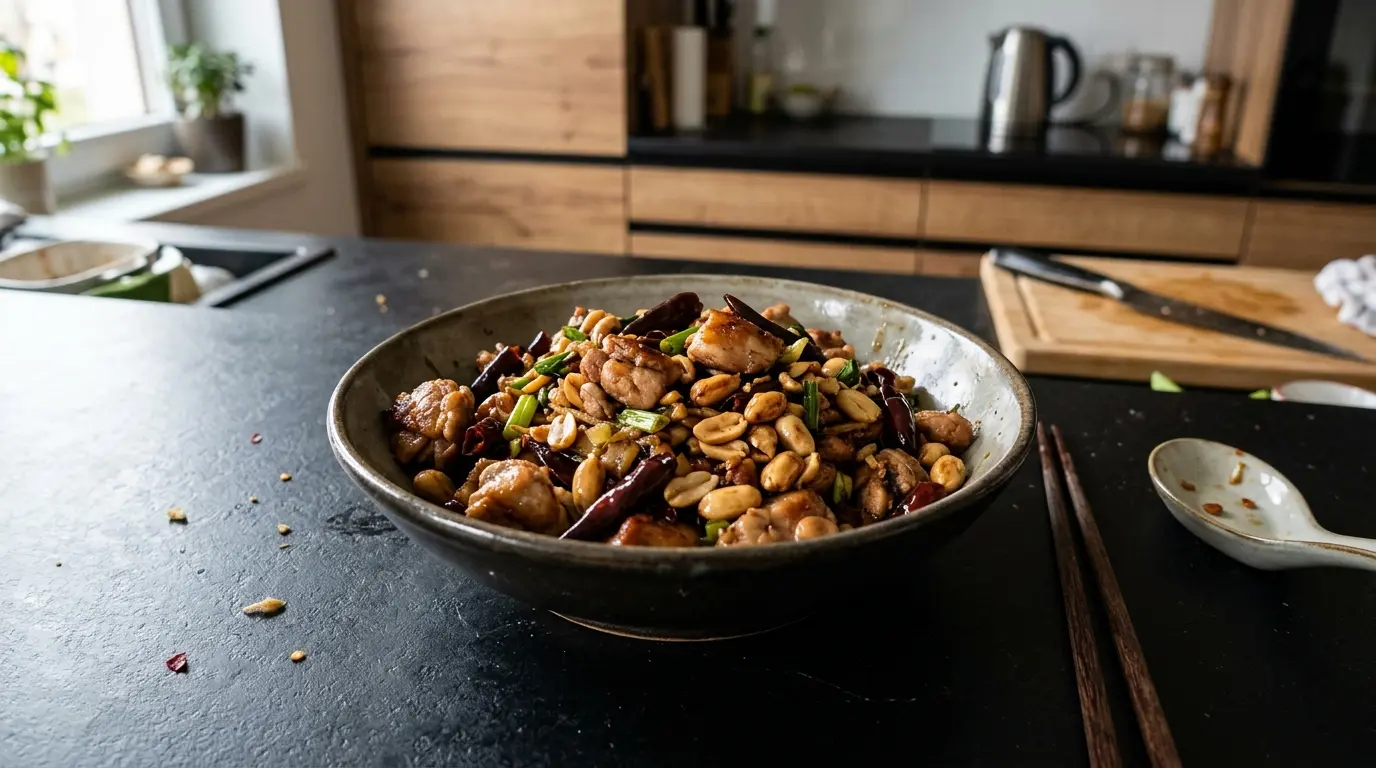
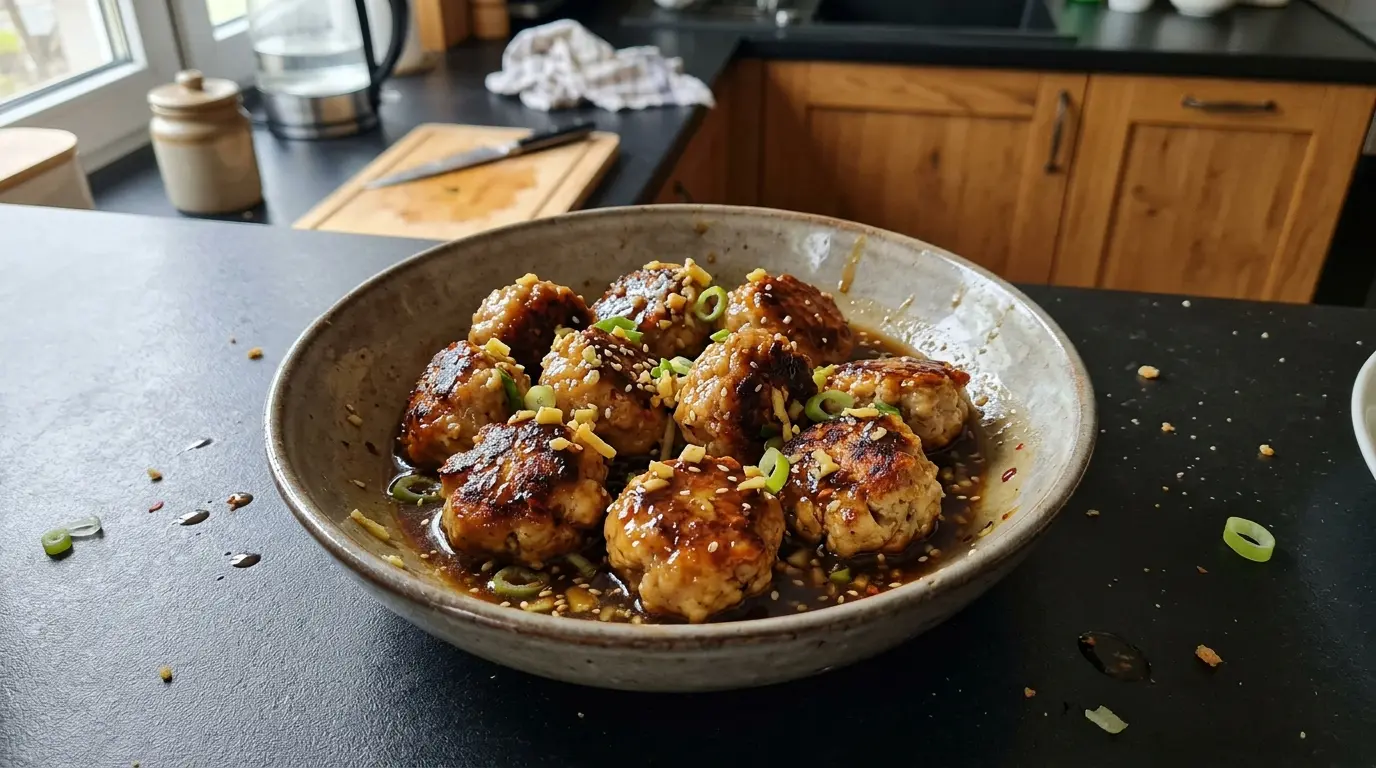
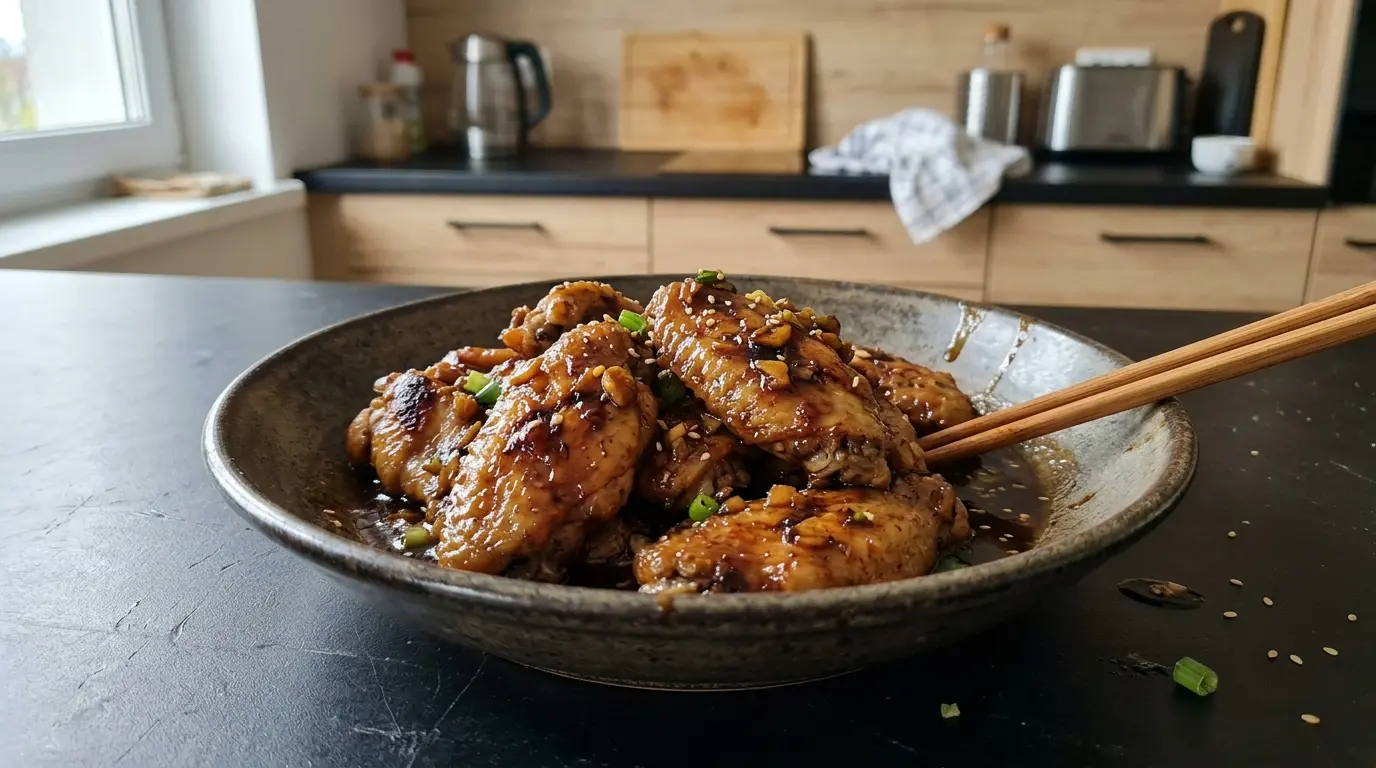
Cantonese Chicken in Honey-Soy Ginger Sauce Recipe
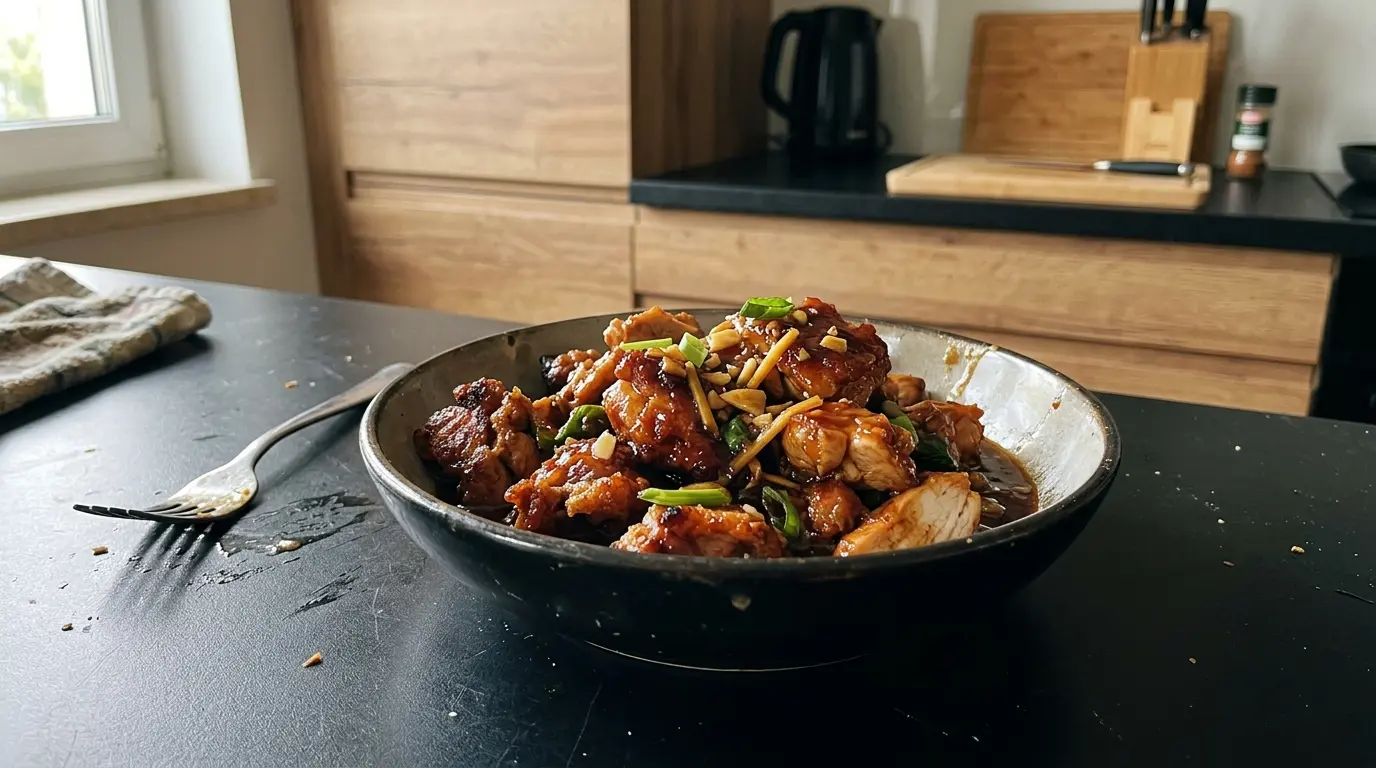
Tender pieces of chicken in a sticky, glossy honey-soy sauce with ginger are a classic of home-style Cantonese cooking. The dish is mild, slightly sweet and very aromatic – perfect for the whole family. In China, quick wok dishes like this often land on the table on weeknights, when everyone comes home tired and wants something warm to eat in 20 minutes.
Sweet‑salty, lightly thickened sauces with ginger are typical of home-style Cantonese cooking, where they’re often paired with delicately prepared poultry. Unlike deep‑battered dishes, here the focus is on the tender texture of the meat and a glossy glaze.
This recipe delivers the comforting flavors of Cantonese home cooking with just a handful of ingredients and minimal effort. Marinating the chicken briefly in soy sauce and starch keeps it tender and juicy, while the honey-soy-ginger sauce turns glossy and sticky, coating every piece. It’s a family-friendly dish that feels like takeout but comes together in about 20 minutes.
Why this version works
- Even, thin strips of chicken and a short frying time give a juicy interior without drying out.
- Starch in the marinade tenderises the meat (velveting), and in the sauce it creates a glossy coating.
- The honey goes into the sauce, not onto a dry pan, so it’s much easier to avoid burning it.
- The ratio of sauce to meat is set so that every piece is coated, but nothing is swimming.
Chef's tips
Slice the chicken evenly so it cooks at the same speed and stays tender. Make sure the pan or wok is really hot before adding the meat – this helps it brown instead of stewing in its own juices. Always stir the sauce again just before pouring it into the pan, because the starch settles quickly and you want it evenly distributed for a smooth, lump-free sauce.
How to serve
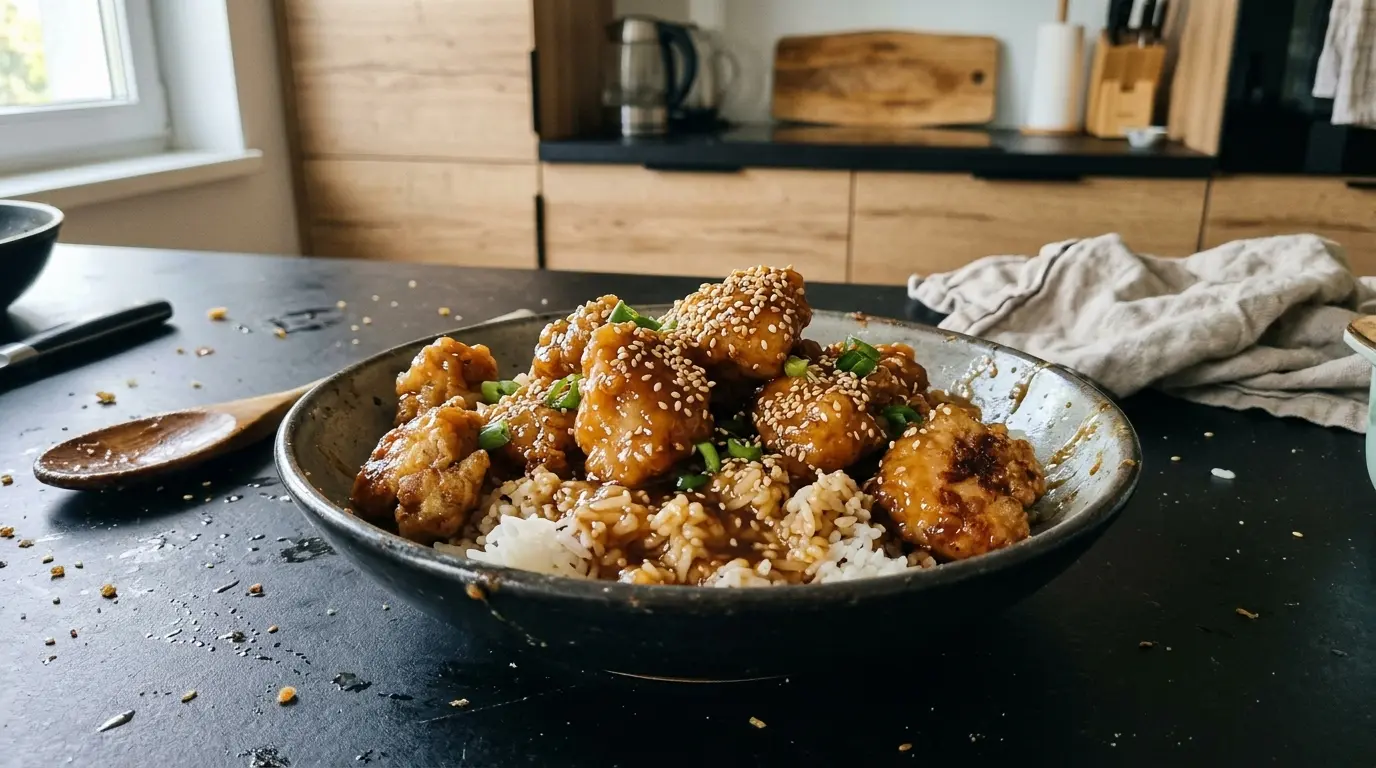
Serve the chicken over plain steamed rice or jasmine rice to soak up the sauce. Add a side of quickly stir-fried or steamed vegetables like broccoli, snow peas or green beans. For a more complete meal, you can also serve it with a simple cucumber salad dressed with rice vinegar and a touch of sesame oil.
Watch out for
- Don’t overcrowd the pan – if the meat sits in a thick layer, it will start to steam and turn pale.
- Before pouring in the sauce, stir the starch again, as it settles on the bottom and the sauce will thicken unevenly.
- If the honey sauce starts bubbling violently, immediately lower the heat so it doesn’t turn bitter.
Substitutions
- You can replace the honey with maple syrup or cane sugar, slightly reducing the amount.
- Rice vinegar can be swapped for apple cider vinegar diluted with a tablespoon of water.
- You can replace white pepper with freshly ground black pepper, adding slightly less.
- Chicken breast can be swapped for boneless thighs, extending the frying time by 1–2 minutes.
Ingredients
- boneless, skinless chicken breast - 400 g
- soy sauce - 3 tablespoon
- honey - 2 tablespoon
- fresh ginger piece about 3 cm - 15 g
- garlic - 3 clove
- rice vinegar - 1 tablespoon
- potato or corn starch - 2 tablespoon
- water - 80 ml
- neutral oil e.g. rapeseed - 2 tablespoon
- sesame oil optional, for aroma - 0.5 tablespoon
- spring onion (green onion) for sprinkling - 2 piece
- ground white pepper you can use black pepper - 0.25 teaspoon
- rice for serving
Preparation
- Cut the chicken into thin strips or small bite-sized pieces. Transfer to a bowl.
- Peel the ginger and grate it finely. Peel the garlic and chop it finely.
- Add 1 tablespoon of soy sauce, 1 tablespoon of starch and a pinch of pepper to the bowl with the chicken. Mix with your hand or a spoon until each piece is lightly coated. Set aside for 10 minutes.
- In a separate small bowl, mix the remaining 2 tablespoons of soy sauce, the honey, rice vinegar, water, grated ginger and garlic. Add 1 teaspoon of starch and mix thoroughly until there are no lumps.
- Heat a large frying pan or wok over high heat. Pour in the vegetable oil and wait until it is very hot (it should shimmer slightly).
- Add the chicken to the pan. Fry for 4–5 minutes, stirring often, until the pieces are white inside and lightly browned on the outside.
- Reduce the heat to medium. Stir the sauce in the bowl again (starch tends to sink to the bottom) and pour it into the pan.
- Cook for 3–4 minutes, stirring, until the sauce thickens, becomes glossy and coats the chicken thoroughly. If it is too thick, add 1–2 tablespoons of water.
- Finally, drizzle the dish with sesame oil and mix. Slice the spring onion into thin rounds.
- Serve the hot chicken over cooked rice, sprinkling the top with spring onion.
Storage
No storage information available for this dish.
This is one of those weeknight recipes that feels like a treat but doesn’t require much planning. The balance of salty soy sauce, sweet honey and warming ginger makes it very approachable, even for kids or people who don’t like very spicy food. Once you’ve made it a couple of times, you can easily adjust the sweetness, acidity or heat to match your own taste.