Cacio e pepe – pasta with cheese and pepper Recipe
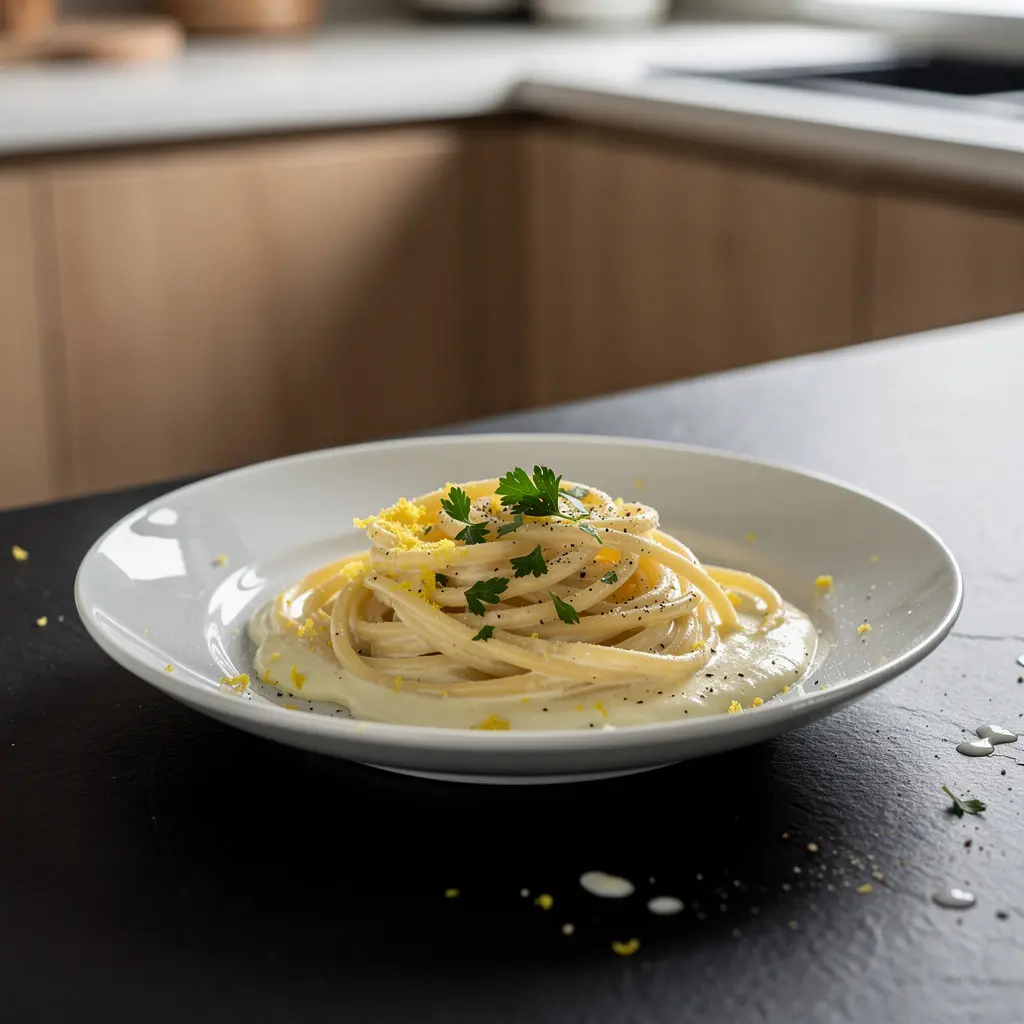
Cacio e pepe is one of the simplest yet most distinctive dishes from Rome. Just pasta, cheese and pepper – and the result is a creamy, peppery sauce without a drop of cream. It’s the Italian equivalent of “mac and cheese”, but in a grown-up version for those who like bold flavour.
This is one of the most iconic dishes of Roman cuisine, alongside carbonara and amatriciana, born from simple shepherds’ ingredients. In Roman trattorias it often serves as a test of a chef’s skill, because there is nothing to hide behind – no extra toppings or add‑ins.
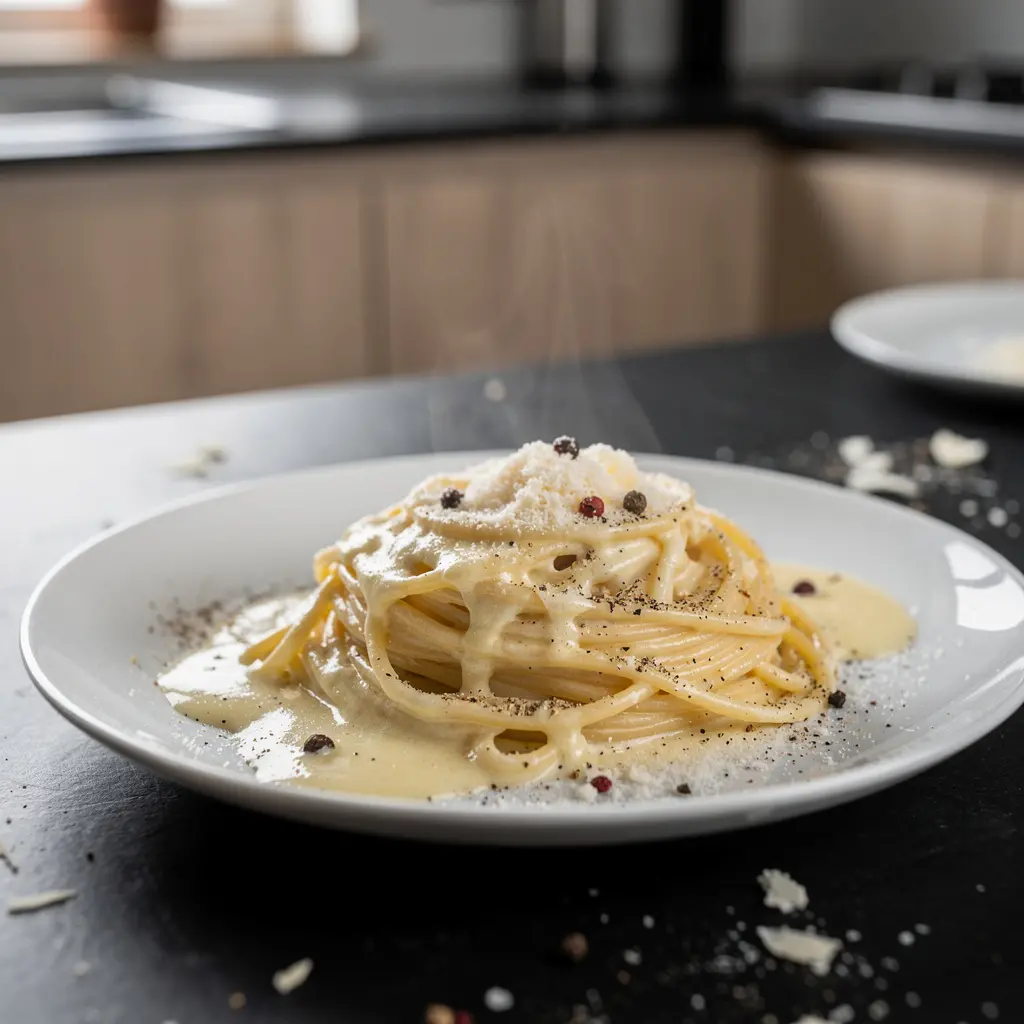
Cacio e pepe is the quintessence of Roman cooking – just three ingredients, yet you get a sauce whose flavour you remember for weeks. Sharp, freshly ground pepper combines with intensely salty pecorino and the starch from the pasta water to create a creamy, velvety emulsion without a drop of cream. This dish shows how far you can go when you master technique instead of adding more ingredients.
Why this version works
- The cheese is combined with warm, not boiling water in a separate bowl, which reduces the risk of curdling.
- The pasta is finished cooking in pepper water in the pan, releasing more starch into the sauce.
- Turning off the heat before adding the cheese paste protects the pecorino from excessive temperature.
- Finely grated cheese melts faster and more easily forms a silky emulsion.
Chef's tips
The most important thing is timing: I drain the pasta very al dente, keeping plenty of hot cooking water, and immediately transfer it to the pan with pepper so the starch can start working. I first mix the pecorino in a bowl with a little warm (not boiling!) pasta water until a thick paste forms – only then do I combine it with the pasta off the heat, tossing vigorously. If the cheese starts to clump and go stringy, you can save it by adding a splash of warm water and continuing to stir like crazy.
How to serve
Cacio e pepe is perfect as a late dinner after the cinema or a quick but “grown-up” pasta for an evening for two when you don’t want to cook for long. Serve it on warmed plates, topped with a little extra freshly ground pepper, with a glass of dry white wine (e.g. Frascati) or a light red. As a side, a simple rocket and lemon salad is enough to refresh the palate between bites of the intense, cheesy sauce.
Watch out for
- Do not use boiling water to make the cheese paste – the pecorino will instantly seize into lumps.
- Do not oversalt the pasta water; once you add pecorino, it’s very easy to end up with an overly salty dish.
- Work quickly after draining the pasta, because once it cools down, the sauce will not bind as smoothly and creamily.
- Using too little pasta cooking water will make the sauce dry and stringy instead of creamy.
Ingredients
- spaghetti or tonnarelli a thicker pasta holds the sauce better - 200 g
- pecorino romano cheese you can replace it with Parmesan, but the flavour will be milder - 80 g
- freshly ground black pepper ideally freshly crushed in a mortar - 2 teaspoons
- salt for the pasta water, use sparingly because the cheese is salty
Preparation
- Finely grate the pecorino cheese. Set aside to warm slightly to room temperature – it will melt more easily.
- Bring a large pot of water to the boil. Salt it, but a bit less than usual, as the cheese is very salty.
- Add the pasta to the boiling water and cook until al dente, soft but with a slight bite in the centre. Reserve about 1.5 cups of the pasta cooking water.
- While the pasta is cooking, heat the freshly ground pepper in a large dry pan over low heat for 1–2 minutes, until very fragrant. Be careful not to burn it.
- Pour about 1/3 cup of the pasta water into the pan with the pepper. Simmer briefly until the liquid starts to bubble gently and takes on the pepper aroma.
- Transfer the cooked pasta to the pan with the pepper water. Toss for 1–2 minutes over medium heat so the pasta absorbs some of the liquid.
- Put the grated pecorino into a bowl and add a few tablespoons of hot pasta water. Stir vigorously with a spoon or whisk until you get a thick, smooth cheese paste without lumps. If needed, add a little more water.
- Remove the pan with the pasta from the heat. Add the cheese paste to the pasta and quickly toss with tongs or two forks for 1–2 minutes, until the cheese melts and forms a creamy sauce. If the sauce is too thick, add a bit of pasta water; if it’s too thin, keep tossing until it thickens.
- Taste and add a little salt if needed. Serve immediately, topped with a pinch of freshly ground pepper and a little extra cheese.
Storage
Cacio e pepe is best eaten immediately. If you must reheat it, add a splash of hot water and warm very gently, stirring constantly, but the texture will never be as creamy as when freshly made.
This is my number one for “sudden hunger” after a late train journey – I put the pasta water on to boil while I’m still in my coat, and 15 minutes later I’m eating something that tastes like it came from a Roman trattoria. I always grind the pepper directly over the pan, because its aroma is half the pleasure.