Ca ri ga – Vietnamese chicken and sweet potato curry Recipe
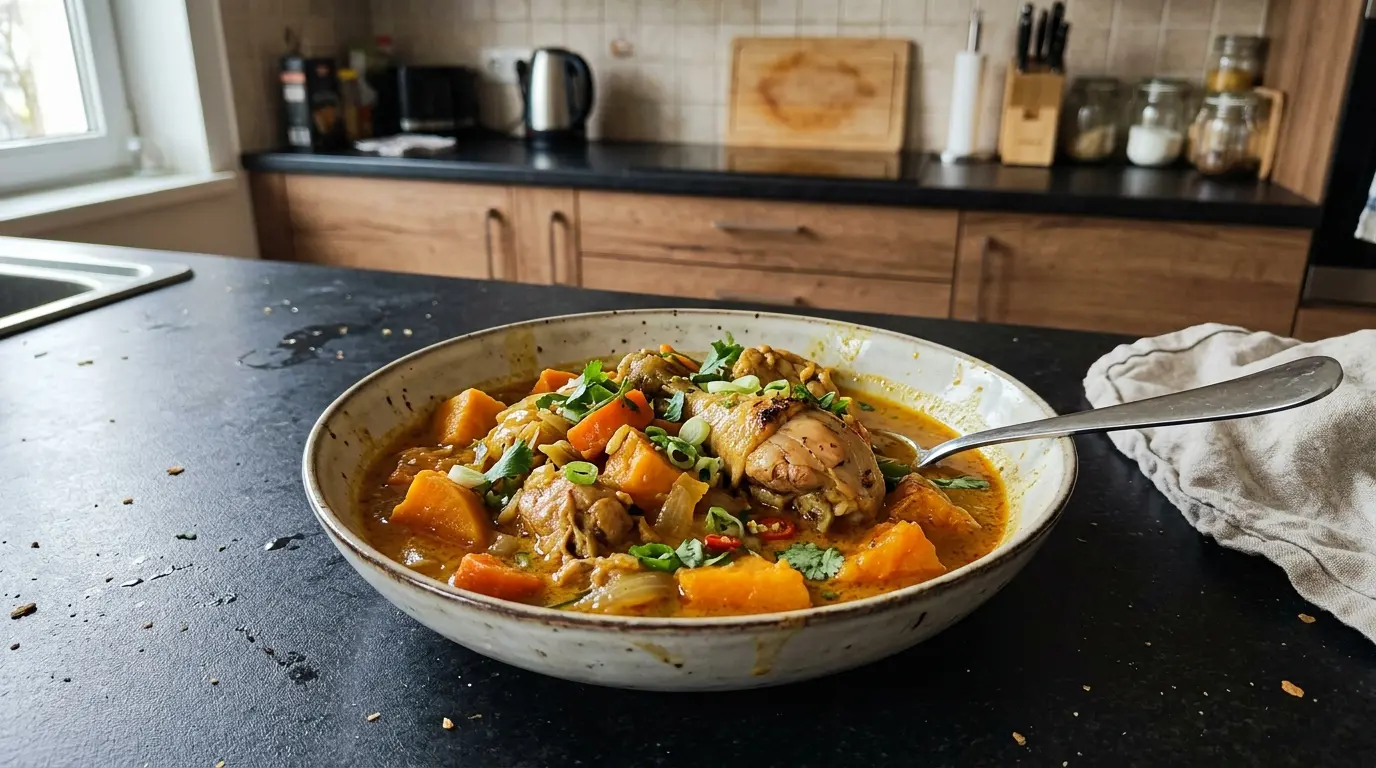
Ca ri ga is a mild, coconut chicken curry that Vietnamese families love to cook for family dinners and holidays. Unlike very spicy Thai curries, this one is gentler, more herbaceous and slightly sweet from the sweet potatoes. Served with baguette or rice, it’s a bit like a thick soup you can dip bread into until the very last drop of sauce.
This Vietnamese curry is creamy and comforting but still light, with a balance of coconut richness, gentle spices and natural sweetness from sweet potatoes. It’s easy to share at the table and lets you enjoy a taste of Vietnamese home cooking without needing hard-to-find ingredients.
Chef's tips
Use chicken thighs rather than breast – they stay juicy and flavorful even after longer simmering. If your curry paste is very salty, reduce the fish sauce at first and adjust at the end. For extra depth, briefly brown the chicken more deeply before adding the liquids.
How to serve
Serve with warm, crusty baguette in the traditional Vietnamese style, or with jasmine rice for a more filling meal. Add a simple cucumber and herb salad on the side to cut through the richness of the coconut sauce.
Ingredients
- boneless chicken thighs cut into larger pieces - 600 g
- sweet potato peeled and cut into cubes - 400 g
- carrot cut into thick slices - 2 piece
- onion sliced into feathers - 1 piece
- garlic finely chopped - 3 clove
- ginger grated, about a 3 cm piece - 20 g
- yellow curry paste or curry powder - 2 tablespoon
- coconut milk - 400 ml
- chicken stock - 400 ml
- fish sauce - 2 tablespoon
- sugar - 1 tablespoon
- vegetable oil - 2 tablespoon
- potatoes peeled and cut into cubes, optional - 200 g
- fresh coriander chopped, for serving - 1 handful
- baguette or rice for serving - 1 piece
Preparation
- Pat the chicken pieces dry with paper towels. Peel the sweet potato, potatoes and carrot and cut them into similar-sized pieces so they cook evenly.
- Heat the oil in a large pan or pot over medium heat. Add the onion and fry for 3–5 minutes, until softened and slightly translucent but not browned.
- Add the garlic and grated ginger and fry for about 1 minute, stirring, until they become very fragrant.
- Add the curry paste and fry for 1–2 minutes, stirring, until it combines with the oil and the spices become even more aromatic. If using curry powder, proceed in the same way.
- Add the chicken pieces and fry for 5–7 minutes, stirring, until the meat is lightly browned on all sides.
- Pour in the coconut milk and stock, add the fish sauce and sugar. Stir, bring to a boil, then reduce the heat to low.
- Add the sweet potato, potatoes and carrot. Simmer on low heat for 20–25 minutes, uncovered or with the lid slightly ajar, until the vegetables are tender and the sauce has thickened slightly. Stir from time to time so nothing sticks to the bottom.
- Taste the curry and, if needed, season with extra fish sauce (for saltiness) or a little sugar (for a milder taste).
- Serve hot, sprinkled with chopped coriander. Serve pieces of baguette on the side for dipping in the sauce, or cooked rice as a side.
Storage
Store leftovers in an airtight container in the fridge for up to 3 days. Reheat gently on the stove, adding a splash of water or stock if the sauce has thickened too much. Do not refreeze once thawed.
This curry reminds me of Vietnamese family-style meals, where everyone gathers around a big pot and shares from the same dish. It’s forgiving, adaptable to what you have on hand, and even better the next day when the flavors have had time to meld.