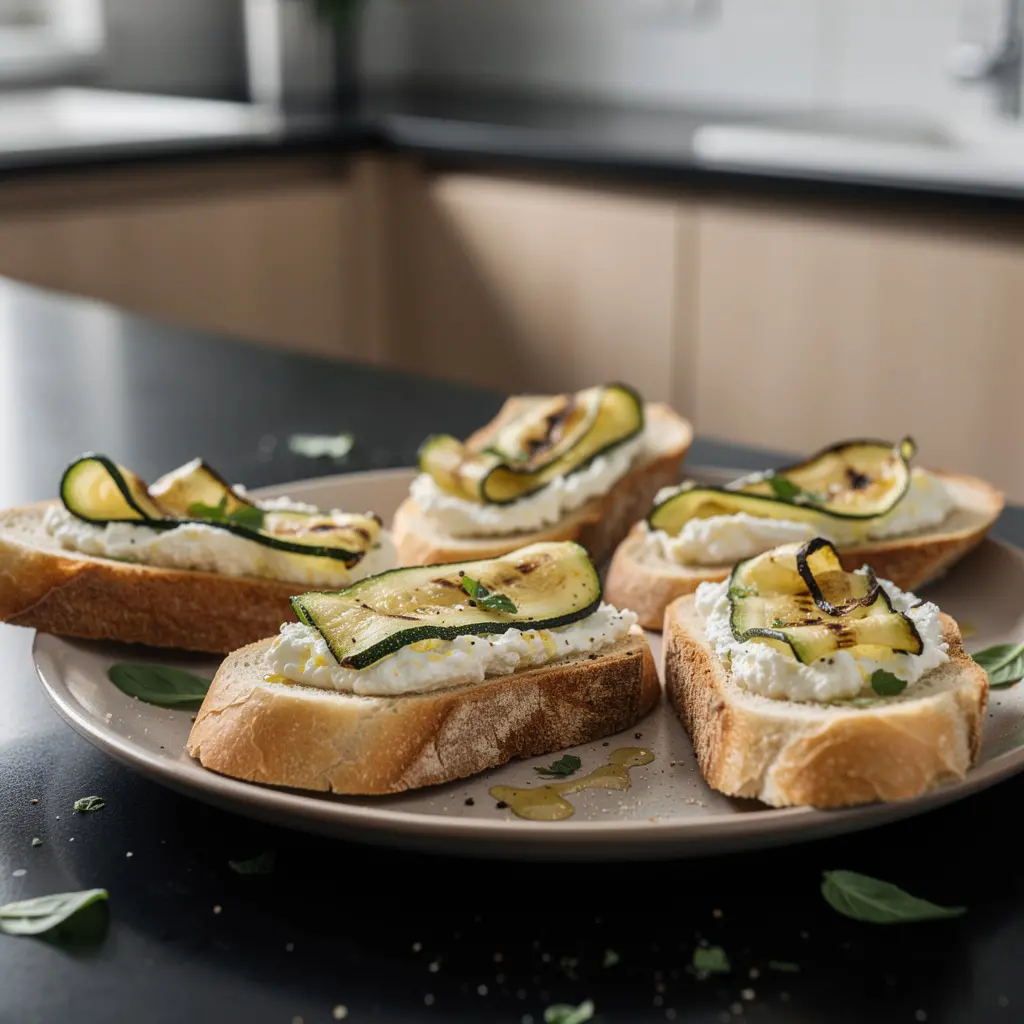
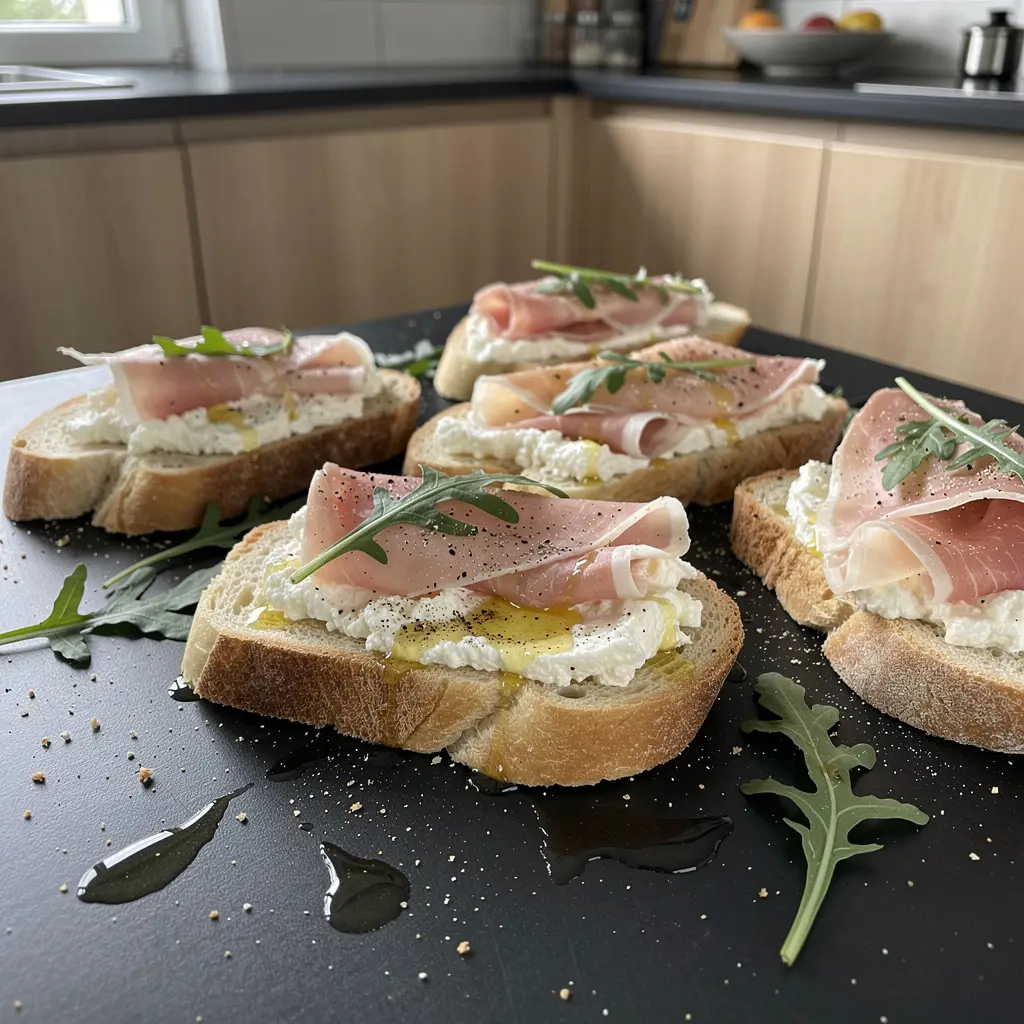
Bruschetta with Ricotta, Lemon and Herbs Recipe
This bruschetta is a fresh, light appetizer with creamy ricotta, lemon zest and herbs. In Italy, toasts like these often appear before lunch as a little “bite” with a glass of wine. It tastes like a cross between a sandwich spread and a light herb dip, but in a very Italian version.
In Italy, bruschetta is a way to refresh slightly stale bread, usually with tomatoes and olive oil. In coastal versions, delicate cheeses and herbs often appear, as they pair better with a light white wine.
This bruschetta combines creamy ricotta with lemony freshness and herbs, making it lighter and more elegant than the classic tomato version. It tastes like a little preview of an Italian dinner – something between a sandwich spread and a delicate cheese dip, but with a distinct citrus-herb twist. It’s exactly the kind of snack that appears in Italy with the first glass of wine, before anything more substantial reaches the table.
Why this version works
- Whipping ricotta with olive oil and lemon creates a smooth, fluffy cream instead of a lumpy cheese.
- Lightly toasting the bread gives you crunch with a soft centre that’s easy to bite into.
- Adding the herbs at the end preserves their bright colour and distinct aroma.
Chef's tips
Toast the bread in a very hot dry pan or in the oven until it’s really crisp on the edges but still soft inside – that way it won’t go soggy from the ricotta. It’s a good idea to lightly salt the ricotta and beat it with a spoon or whisk so it becomes fluffy; grate the lemon zest only from the outer yellow layer, as the white pith is bitter. Add the herbs just before serving so they don’t darken or lose their aroma.
How to serve
Serve as an antipasto with a glass of chilled white wine, such as Pinot Grigio, or with homemade lemonade if you’re making a non-alcoholic version. It’s perfect for a terrace gathering on a warm evening or as part of a “board” with several different bruschette for a house party. You can add thin slices of radish or a few capers on top if you like bolder flavors.
Watch out for
- Don’t toast the bread until dark brown – once you spread the cream on, it will be as hard as a rusk.
- If the ricotta is watery and you don’t drain it, the cream will turn runny and start soaking into the toasts.
Substitutions
- You can replace ricotta with cheesecake-style curd cheese or cream cheese, loosening it with a splash of milk.
- You can swap the basil for fresh chives or oregano, if that’s what you have on hand.
- You can replace part of the lemon juice with grated lime zest for a more pronounced aroma.
Ingredients
- baguette or other light bread about 250–300 g - 1 piece
- ricotta cheese - 250 g
- lemon preferably unwaxed, you’ll use the zest and juice - 1 piece
- fresh basil - 0.5 handfuls
- fresh flat-leaf parsley - 0.5 handfuls
- olive oil plus a little for drizzling the bread - 3 tablespoons
- garlic for rubbing the toasts - 1 clove
- salt to taste
- freshly ground black pepper to taste
Preparation
- Preheat the oven to 200°C (top and bottom heat), and line a baking tray with baking paper. Slice the baguette on a slight diagonal into slices about 1.5 cm thick so they have a large, oval surface.
- Arrange the slices in a single layer and drizzle both sides with a thin layer of olive oil. Bake for 6–8 minutes, until the edges are light golden and crisp and the centre is springy to the touch, not hard like a rusk.
- Put the ricotta in a bowl. From a thoroughly washed and dried lemon, finely grate only the yellow zest and add it to the cheese – the mixture should smell intensely of lemon, without any bitter note.
- Add 1–2 tablespoons of lemon juice, 2 tablespoons of olive oil, a pinch of salt and pepper. Beat with a spoon or whisk for 1–2 minutes, until the ricotta becomes noticeably smoother, aerated and lightly fluffy.
- Very finely chop the basil and parsley just before serving. Add them to the ricotta and gently mix so that the mixture stays white with green specks, rather than turning completely green.
- Remove the toasted slices from the oven. Cut the garlic clove in half and quickly rub it over the still-warm bread 1–2 times to give aroma without a sharp flavour.
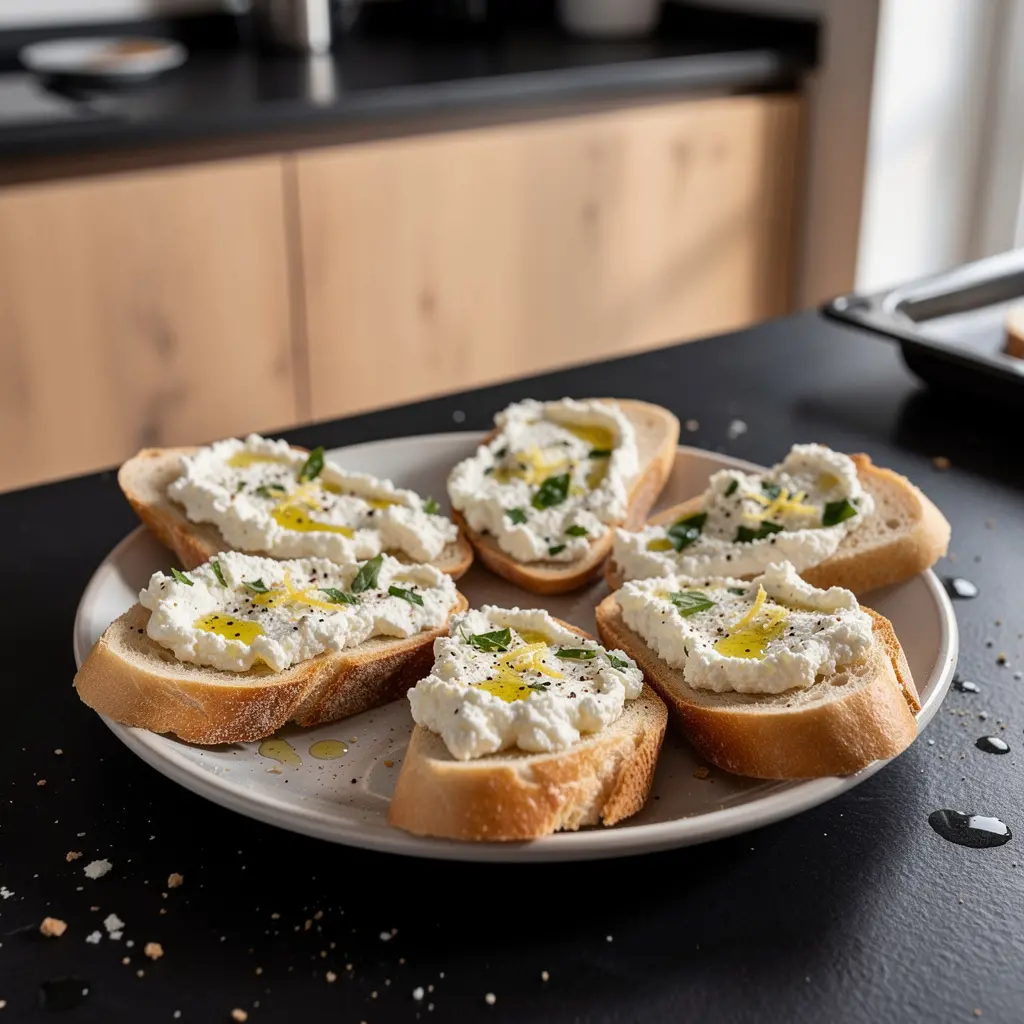
- Place a portion of the ricotta cream on each toast so it forms a distinct, soft “pillow”. Smooth it with a teaspoon, leaving a thin margin around the edges so the mixture doesn’t run off.
- You can drizzle the toasts with a little olive oil and sprinkle with freshly ground pepper or basil leaves. Serve immediately, while the bread is still slightly warm and the ricotta cool.
Storage
Store leftover ricotta cream in an airtight container in the fridge and use within 1–2 days. Toast fresh bread just before serving again. Already assembled bruschette are best eaten right away, as the bread softens quickly from the topping.
I usually make these toasts when friends drop by “just for an hour” and I don’t have time to cook – I grab a baguette on my way home from work and the rest of the ingredients are usually already waiting in the fridge. I also sometimes eat two of these bruschette as a quick Saturday breakfast with a big coffee from the moka pot.