Arni sto fourno – Greek roast lamb with potatoes Recipe
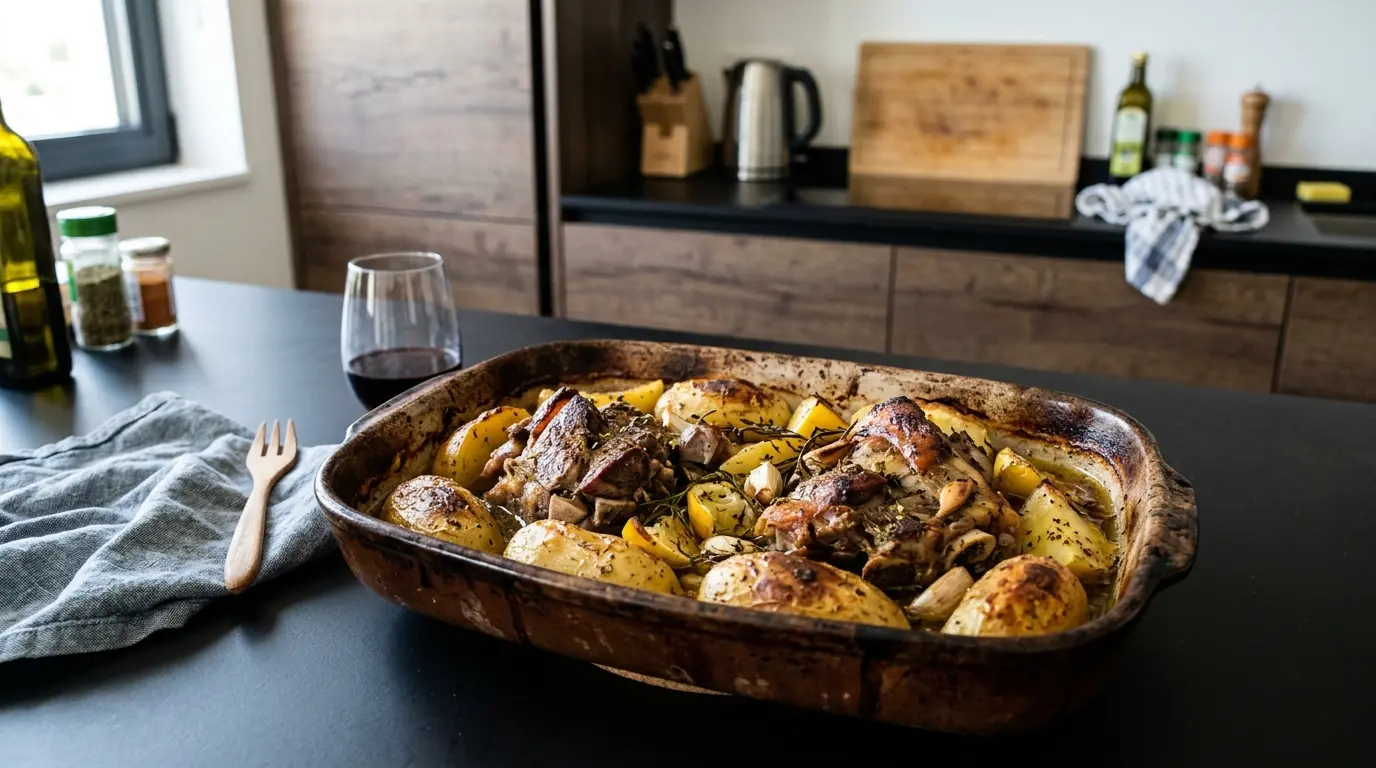
Arni sto fourno is slow-roasted lamb with potatoes, garlic, and lemon, often served in Greece for family Sundays and holidays. The meat is tender, juicy, and lightly lemony, while the potatoes soak up all the flavor of the sauce. It’s a bit like a classic roast with potatoes, just more herb-forward and fragrant with olive oil.
This style of roast lamb is a staple of Greek Sunday lunches, Easter, and family gatherings. In many homes it is traditionally baked in a wood‑fired oven, but a regular home oven recreates the character of the dish very well.
This dish captures the essence of Greek home cooking: simple ingredients, slow roasting, and lots of lemon, herbs, and olive oil. The lamb becomes incredibly tender, and the potatoes soak up all the aromatic juices, giving you a complete, comforting meal from one pan.
Why this version works
- Roasting the meat directly on top of the potatoes lets the potatoes soak up the lamb juices so they don’t dry out.
- Two‑stage roasting (covered first, then uncovered) gives you tender meat inside and a deeply browned exterior.
- Lemon and herbs balance the richness of the lamb, so the dish is full‑flavoured but not heavy.
- Adding butter at the end intensifies the flavour of the sauce and gives it a slightly velvety texture.
Chef's tips
Use good-quality olive oil and don’t rush the marinating or roasting time – the longer, gentle heat is what makes the lamb so soft. If your lamb has a thick layer of fat, you can trim some of it off, but leave a bit so the meat stays juicy and flavors the potatoes.
How to serve
Serve straight from the baking dish placed in the middle of the table so everyone can help themselves. Add a bowl of Greek-style salad, some crusty bread to mop up the sauce, and, if you like, a side of tzatziki or plain yogurt with herbs.
Watch out for
- Don’t let the bottom of the roasting pan dry out completely – if needed, add a few tablespoons of water or stock.
- If the temperature is too high from the start, the meat will brown quickly but stay tough in the centre.
- Don’t carve the meat immediately after taking it out of the oven – the juices will run out and the roast will end up dry.
Substitutions
- You can replace the lamb with turkey shoulder or pork shoulder, extending the roasting time by about 20–30 minutes.
- You can swap dried rosemary for fresh (about 1 tablespoon, finely chopped).
- You can replace part of the water in the roasting pan with a light vegetable or chicken stock.
Ingredients
- lamb pieces on the bone, e.g. shoulder or leg - 1.2 kg
- potatoes peeled, cut into thick wedges - 1 kg
- garlic 3 cloves for the meat, 2 for the marinade - 5 cloves
- lemon juice and grated zest of one - 2 pieces
- olive oil - 5 tablespoons
- oregano dried - 2 teaspoons
- rosemary dried or 2 sprigs fresh - 1 teaspoon
- salt for rubbing the meat and potatoes
- pepper freshly ground
- water for roasting - 250 ml
- butter optional, for drizzling over the meat - 20 g
Preparation
- Rinse the lamb, pat it completely dry with paper towels and trim off any visible membranes. With a sharp knife, make deep cuts every 3–4 cm, almost down to the bone – you should feel resistance but not cut all the way through the meat.
- Cut three garlic cloves in half and press them into the cuts until they disappear below the surface of the meat. Rub the lamb generously with salt and pepper on all sides until the surface is evenly coated and slightly tacky.
- In a bowl, mix the juice and finely grated zest of one lemon, 3 tablespoons of olive oil, 2 garlic cloves pressed through a garlic press, the oregano and rosemary. Pour the marinade over the meat and massage it in thoroughly, including into the cuts, until no dry spots remain. Leave for at least 30 minutes (or for a few hours in the fridge).
- Peel the potatoes and cut them into large wedges of similar size. Transfer to a large roasting pan, drizzle with 2 tablespoons of olive oil, season with salt and pepper. Mix with your hands until every piece is glossy and feels lightly oily to the touch.
- Place the marinated meat on top of the potatoes together with all the marinade, meat side up. Pour in the water and the juice of the second lemon, trying not to wash the seasoning off the surface of the meat; the liquid should come to about halfway up the height of the potatoes.
- Cover the roasting pan tightly with aluminium foil or a lid, pressing down the edges so there are no gaps. Put into an oven preheated to 180°C (top and bottom heat) and roast for about 1.5 hours, until the meat is tender when pierced with a fork and a potato can be easily cut through.
- Halfway through roasting, carefully uncover, gently stir the potatoes with the sauce without lifting the meat. If the sauce only forms a thin layer on the bottom, add a few tablespoons of water.
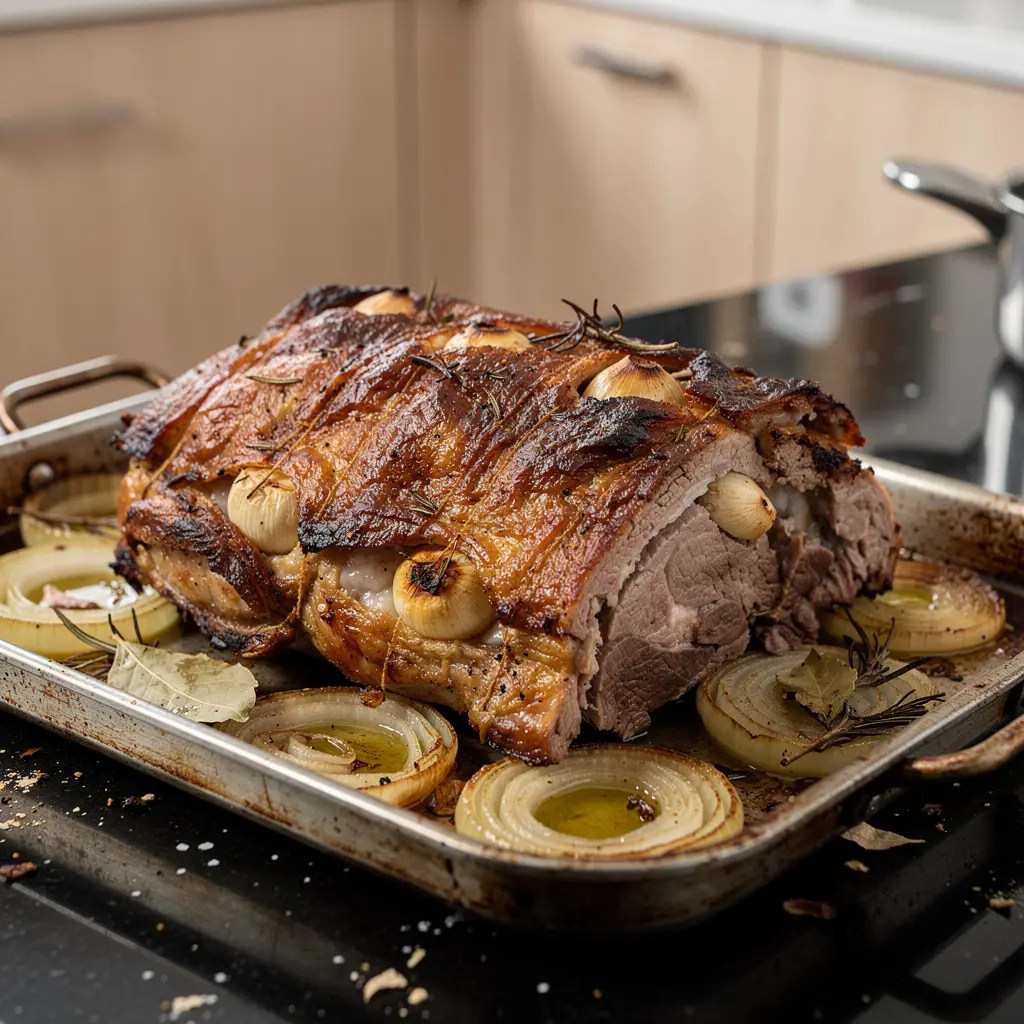
- After 1.5 hours, remove the cover. If using butter, dot small pieces over the meat. Increase the temperature to 200°C and roast for another 20–30 minutes, until the top of the meat is deeply browned and the edges of the potatoes are golden and slightly crisp.
- Take the roasting pan out and let the meat rest for 10 minutes under a loose tent of foil so the juices can settle. Slice across the grain into portions and serve with the potatoes, generously spooning over the sauce from the bottom of the pan.
Storage
No storage information available for this dish.
This is one of those dishes that fills the whole house with a holiday smell, even if it’s just an ordinary Sunday. It’s forgiving and flexible, so don’t worry too much about exact timings – just keep an eye on the color of the meat and potatoes and adjust slightly to your oven.